Format • Flexible Packaging
Certified Compostable Caddy Liners
Certified compostable caddy liners for Australian FOGO and organics programs, delivering compliant formats, credible claims, and practical supply for councils and retail.
Format • Flexible Packaging
Overview
Certified compostable caddy liners for Australian FOGO and organics programs, delivering compliant formats, credible claims, and practical supply for councils and retail.
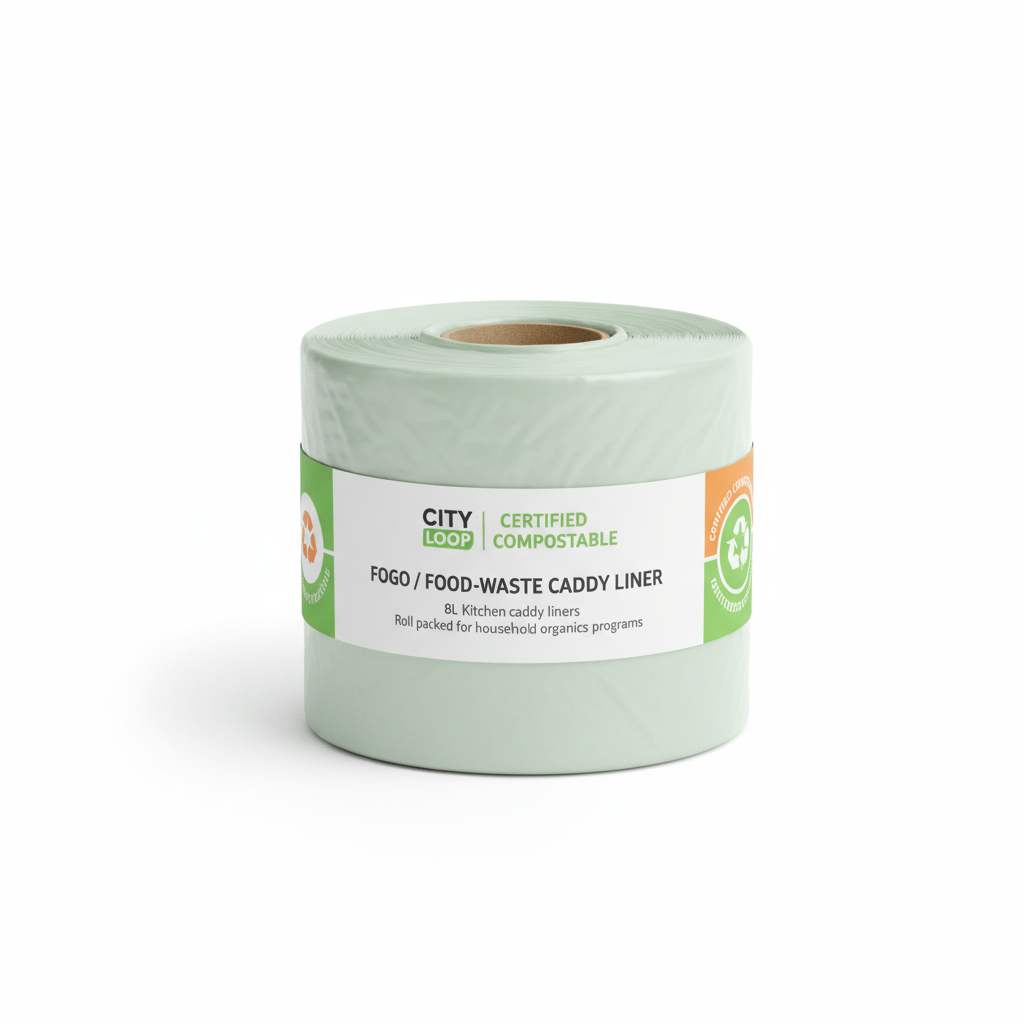
product image
Product image for this SKU, shown to help teams compare structure, shape, and handling details before RFQ.
Real End-of-Life Fit
Best used where organics collection or composting systems actually accept certified compostable liners.
Certification Discipline
Claims only work when the resin system, print, and bag format align to the target certification and market rules.
Program Supply Support
We align bag size, film gauge, packing format, and storage expectations to council, retail, or distributor programs.
Where Compostable Caddy Liners Fit Best
Compostable caddy liners are strongest in food-waste and organics programs where the disposal route is clearly defined. They are not a catch-all replacement for every disposable bag application.
- Municipal FOGO and household food-waste collection programs
- Retail or distributor ranges for kitchen caddy liners and compostable bin liners
- Sites that need certified liners matched to organics collection guidance
What The Product Usually Involves
These bags usually rely on certified compostable film systems and should be positioned around the correct disposal route, storage conditions, and bag-use profile rather than broad eco language.
- Small caddy-liner and household organics-liner formats
- Certification matched to the market, such as AS4736, AS5810, EN 13432, or ASTM D6400 depending on the program
- Controlled print, thickness, and seal design to balance usability with compostability goals
- Packing and storage guidance to reduce premature ageing or warehouse damage
How We De-Risk The Rollout
We recommend validating bag size, puncture tolerance, shelf storage, and local program fit before scaling. Compostable claims only build trust when the collection route and handling guidance are clear.
- Confirm the target council, retailer, or organics-collection requirement first
- Choose size and thickness around actual food-waste loads, not just target cost
- Review shelf life and warehouse storage conditions early
- Keep claims tied to certification scope and the intended disposal route
FAQs
What typical sizes and formats are available for Certified Compostable Caddy Liners?
Common formats include 7L to 10L caddy liners plus larger household or wheeled-bin sizes, packed on rolls or in folded retail bundles.
Which certifications do Certified Compostable Caddy Liners support?
Pathways include AS4736 or AS5810 for Australia, EN 13432 for Europe, and ASTM D6400 for the USA, matched to the target market and program.
Are Certified Compostable Caddy Liners suitable for municipal FOGO programs?
Yes, when certification, bag size, storage guidance, and disposal instructions align with the council's organics collection requirements.
What key specs should be considered for Certified Compostable Caddy Liners rollout?
Align bag size, film thickness, seal design, and packing format to food-waste loads, storage conditions, and target certification scope.
How should Certified Compostable Caddy Liners be stored in warehouse conditions?
Use controlled temperature and humidity with packing guidance to prevent premature ageing, tighter than for standard PE liners.
What tradeoffs exist for puncture tolerance in Certified Compostable Caddy Liners vs PE bags?
Compostable films may have reduced puncture tolerance and heat sensitivity, so validate around actual food-waste loads and handling.
Can Certified Compostable Caddy Liners fit retail kitchen caddy liner programs in Europe?
Yes, with EN 13432 certification, appropriate sizes like 7-10L, and storage aligned to retail packing and merchandising needs.
How to de-risk introducing Certified Compostable Caddy Liners in household organics collection?
Validate size, shelf life, storage, and local program fit first, keeping claims tied to certification and clear disposal routes.